
Zeiss, the popular optical systems manufacturer has announced a VR headset. The Zeiss VR One Connect will be presented at the IFA 2017 in a few days. Notably, this VR device will fill the gap between mobile and PC virtual reality.
Zeiss revealed in its press release that the new VR headset features two wireless controllers and it combines the graphical qualities of PC-connected VR headsets with the simplicity of a mobile VR headset.
To use the VR headset, all you need is one of the latest smartphones (iOS or Android) which should be between 4.7 and 5.5 inches in size. Now, you need to insert your phone into the Zeiss VR ONE Plus headset and you’re ready to go. The built-in sensors on your phone will record your head movements.
Zeiss VR One Features
A key feature of the Zeiss VR One Connect is its wireless 3DoF controllers. 3DoF means that three degrees of freedom motion axes are recorded by the sensors. You can do this by tilting it forwards, swiveling to the left or right, and rotating your wrist. These two controllers are compact and lightweight. Also, these are easy to grip with ergonomic shape and non-slip surface.

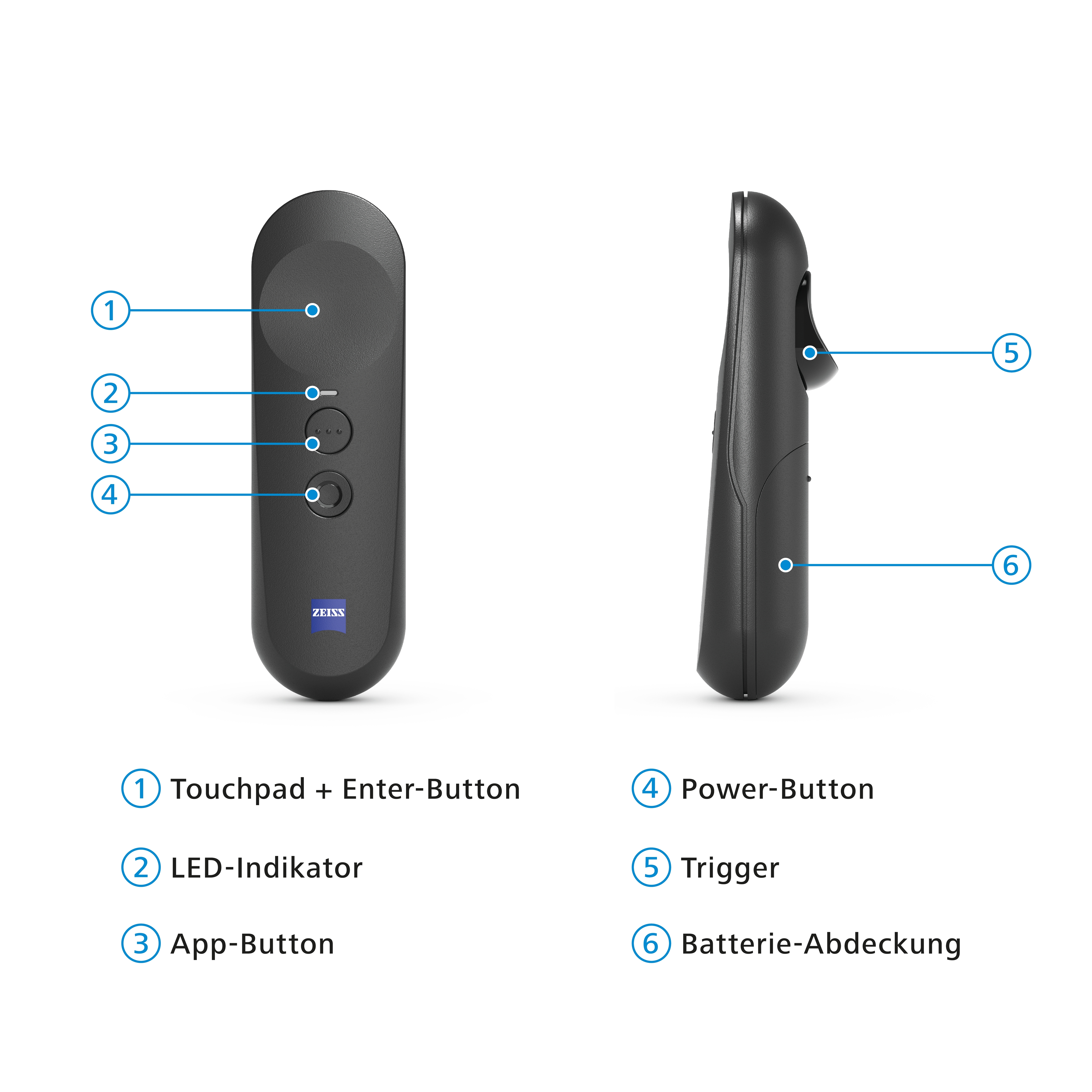
The controllers and the smartphone are linked via Bluetooth. You can operate the VR games through the integrated touchpads and trigger buttons. The sensors in the controllers and in the smartphone, enable you to interact with the VR experience with great ease.
Moreover, Steam platform VR games can be played on a smartphone with the help of this VR headset. Zeiss VR One Connect has been optimized for use with SteamVR and works with its current games. To those who are unaware, Steam is one of the world’s largest online marketplaces for computer games and software based on VR content.
Pricing and Availability
Zeiss VR One Connect is set to be released at the end of 2017 and the company will retail it for €129 (Rs. 9,990 approx.). However, if you want to buy the Zeiss VR One Plus with its bundle including two wireless 3DoF controllers, a USB cable to connect the headset to your computer, and a cable clip and the software, it will cost €199 (Rs. 15,200 approx.).
Comments
Post a Comment